
 Cart is empty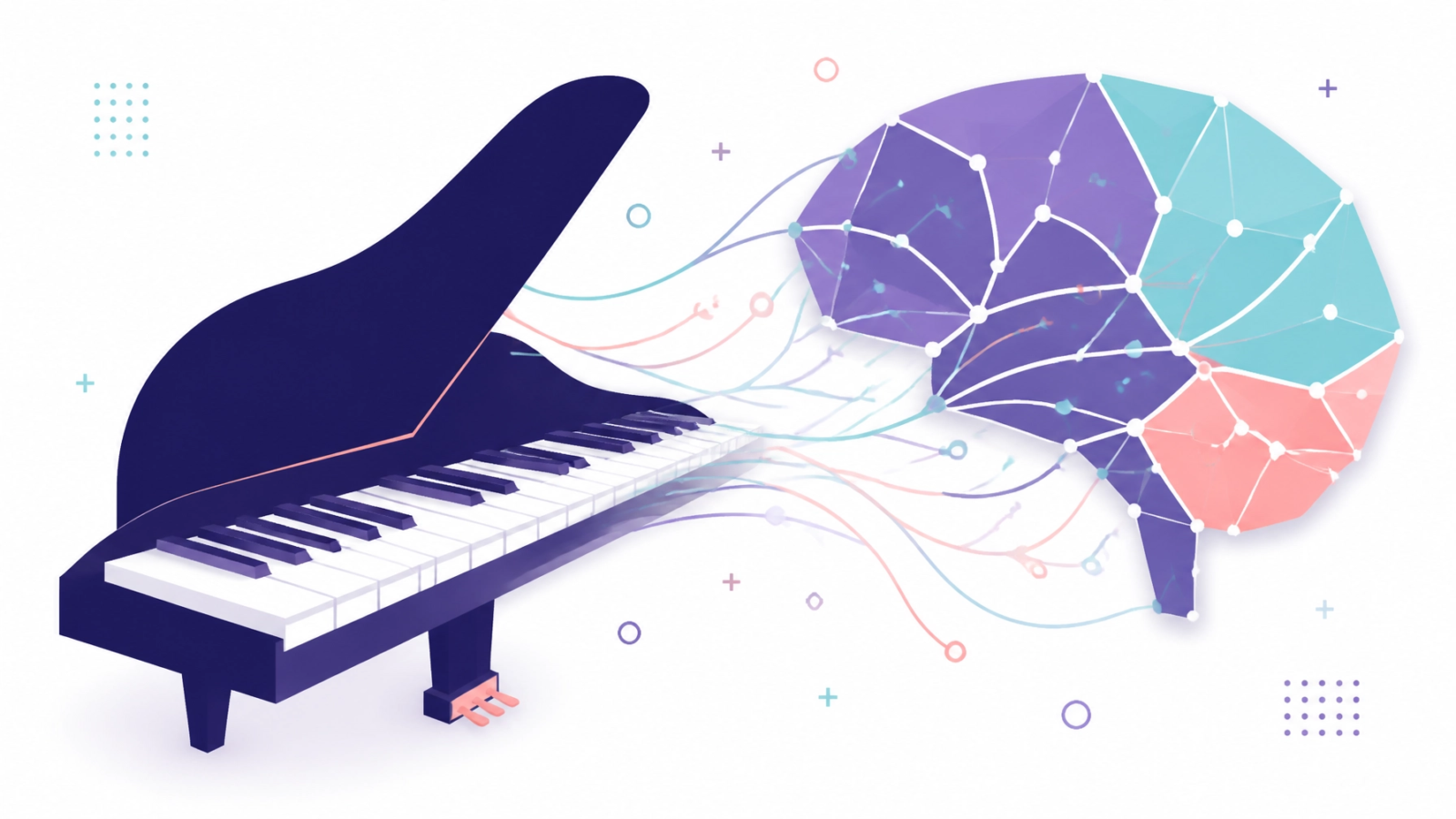
The human brain possesses a remarkable capacity for structural and functional reorganization in response to environmental demands and learning experiences, a phenomenon known as neural plasticity. While various forms of cognitive and physical training can induce plastic changes, few activities demand the same level of multimodal integration as learning a musical instrument. Research in the fields of neuroscience and pedagogy indicates that beginner piano lessons serve as a potent catalyst for reshaping the cerebral cortex. This article examines the evidence-based structural changes that occur when you begin your journey into piano performance, focusing on the motor, auditory, and executive regions of the brain.
Cortical Thickening and the Motor System
The most immediate physiological changes observed in new piano students occur within the primary motor cortex and the premotor areas. Learning to play the piano requires the development of highly specialized fine motor skills and the synchronization of complex finger movements. According to a landmark study by Gaser and Schlaug (2003), individuals who engage in consistent keyboard training exhibit significantly larger gray matter volumes in the perirolandic regions, including the primary motor cortex and the somatosensory cortex.
This structural growth is not limited to long-term practitioners. Research has demonstrated that microstructural changes can be detected after relatively short periods of training. One study utilized diffusion MRI to observe a 2–3% reduction in mean diffusivity in the left premotor cortex after just 45 minutes of intensive practice. This reduction suggests a rapid reorganization of white-matter organization and an increase in the efficiency of the neural pathways responsible for movement planning. As you progress through beginner piano lessons, these initial micro-changes stabilize into permanent structural adaptations, facilitating the transition from conscious, labored gestures to fluid automatism.

Auditory Processing and Temporal Lobe Expansion
The piano is not merely a tactile instrument; it is an auditory one that requires precise frequency perception and rhythmic discrimination. This intensive auditory stimulation leads to measurable changes in the temporal lobes, specifically within Heschl’s gyri, which house the primary auditory cortex. A longitudinal study by Hyde et al. (2009) followed children who received 15 months of weekly instrumental lessons and found significant growth in the auditory cortex compared to a control group.
These changes enhance your ability to process sound with greater precision. This refined auditory processing is not only beneficial for music but also improves the brain’s ability to decode speech and language syntax. For those pursuing flute lessons in Ottawa or clarinet lessons in Ottawa, similar auditory benefits are observed, as the brain must learn to differentiate subtle variations in timbre and pitch. The increased gray matter density in these regions allows for more efficient sound encoding, which is a foundational component of auditory cognitive development.
Hemispheric Integration and the Corpus Callosum
One of the unique challenges of piano playing is the requirement for bimanual coordination. Each hand must often perform independent rhythmic and melodic patterns simultaneously. This requires constant communication between the left and right hemispheres of the brain. The primary conduit for this communication is the corpus callosum, a thick band of nerve fibers connecting the two cerebral hemispheres.
Research by Steele et al. (2013) suggests that musical training, especially when started during a sensitive period between ages 6 and 8, leads to enhanced white-matter connectivity in the corpus callosum. This structural reinforcement improves the speed and efficiency of inter-hemispheric transfer. For adult beginners, while the sensitive period may have passed, the brain still retains the ability to strengthen these connections through persistent practice. Improved hemispheric integration supports better bilateral motor control and contributes to a more unified processing of spatial and temporal information.

Executive Function and the Prefrontal Cortex
Beyond sensory and motor changes, piano lessons significantly impact the prefrontal cortex, the area of the brain responsible for executive functions such as planning, working memory, and cognitive flexibility. Playing the piano involves a high degree of scaffolding: building new skills upon existing ones: while simultaneously monitoring for errors in real-time.
A 2021 study by Bianco et al. published in Cerebral Cortex identified the lateral prefrontal cortex as a critical hub for music production. This region translates musical structural rules into specific finger movements. As you engage with music theory lessons, you are essentially training your brain to manage complex rule-based systems. This type of mental engagement strengthens the neural circuits involved in attention and inhibitory control. These cognitive benefits are particularly relevant for students in school bands or those taking ukulele lessons, where reading notation and maintaining rhythm require sustained concentration and error-correction.
Somatosensory and Visuospatial Integration
The process of reading sheet music and translating those visual symbols into physical movements on the keys requires a high degree of visuospatial and somatosensory integration. The parietal cortex plays a central role in this mapping. Over time, the brain develops a more sophisticated somatosensory map, allowing the student to navigate the keyboard with minimal visual reliance.
This multisensory integration is a core component of the methodology used at Allegro Ma Non Troppo. By providing bilingual instruction in English and Spanish, our expert teachers further challenge the brain's linguistic and cognitive processing centers. Research into the bilingual brain suggests that dual-language learning can increase cognitive reserve, which, when combined with the structural benefits of music, creates a highly resilient and adaptable neural architecture. Whether you are seeking online lessons or in-person instruction at our Ottawa studio, the focus remains on evidence-based pedagogical models that maximize these biological advantages.

Strategic Implementation and Learning Logistics
At Allegro Ma Non Troppo, we ensure that the logistical framework of our music education supports your cognitive development without unnecessary stressors. We offer flexible scheduling and personalized instruction tailored to individual goals, whether you are a child beginning your musical journey or an adult looking to enhance your cognitive health.
Our pricing structure is designed to be transparent and accessible, encouraging the long-term commitment necessary for structural brain change. We offer various lesson durations to fit your schedule:
- 30-minute lessons: Ideal for young children and beginners starting their neural foundation.
- 45-minute lessons: Recommended for intermediate students focusing on technical proficiency.
- 60-minute lessons: Designed for advanced students or adults seeking intensive skill acquisition.
To facilitate consistent training, we provide several financial incentives for our community:
- Single Trial Lesson:
$35.00$0.00 (Free for all new students to assess compatibility). - Lesson Bundles: Savings are applied when purchasing 5 or 10-lesson packages.
- Family Plan: A discount is available for families with 3 or more members enrolled in our programs.
Our studio provides all necessary support for school band students, ensuring that their private instruction complements their academic musical participation. By focusing on expert, Master-level instruction, we provide the pedagogical scaffolding required for sustained progress.

Conclusion
The scientific consensus is clear: beginner piano lessons do more than teach a new skill; they fundamentally alter the physical structure of your brain. From the expansion of the motor cortex to the strengthening of the corpus callosum, the neurological benefits of music are profound and evidence-based. By choosing piano lessons in Ottawa with Allegro Ma Non Troppo, you are investing in a proven method of cognitive enhancement. The integration of bilingual instruction and specialized support for wind instruments ensures that every student can find a pathway to optimize their neural connectivity and academic performance.
Leave A Comment